

Introduction
On a chilly December in 1948, Berlin was more than a city locked behind a blockade—it was a place where hope flickered in the frigid winter air. As the world watched, service men and women took to the skies, not just to deliver the regular vital supplies, but to bring a touch of holiday magic to thousands of German children denied a traditional Christmas. Reminding us that even in the darkest times, acts of kindness can light up the world.
Operation Santa Claus
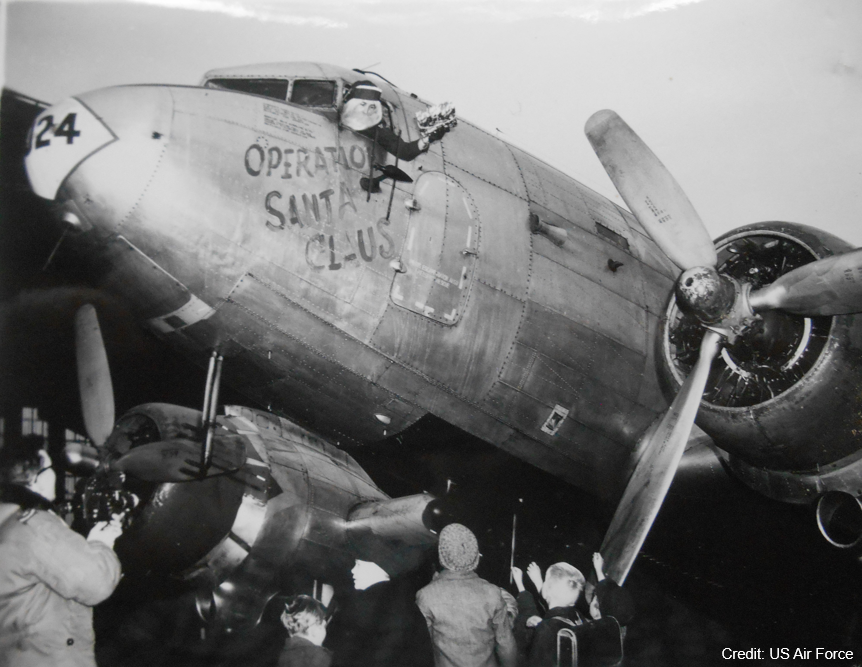
As the blockade stretched on and the winter nights grew longer, hope for a joyful Christmas seemed nonexistent for Berlin’s children. Yet, inspired by compassion and a determination to lift spirits, Air Force personnel initiated a heartfelt campaign back home. They called for donations—simple gifts, toys, candies, and warm essentials—to bring a sense of normalcy and cheer to a generation marked by war and hardship. Their appeal did not go unanswered. From across the Atlantic and Western Europe, packages began to arrive, each filled with the goodwill of strangers who believed that even in the grimmest times, children deserved to experience the magic of Christmas.
In the days leading to Christmas, these gifts were carefully loaded onto the planes delivering life-sustaining food and coal into the city. Alongside the rations, parcels of hope came to Berlin, signaling that the world had not forgotten its youngest victims. The excitement grew as word spread that, for one special day, General Clay had ordered electricity to remain on in the Western sectors, ensuring homes would be lit and warm for the festivities.
When Christmas Day arrived, the Allied sector abounded with celebrations. Churches and makeshift halls became scenes of laughter and joy. Santa Clauses—some in uniform, others in borrowed red suits—handed out the precious gifts. For many children, it was their first taste of chocolate, their first new toy in years, or simply a reason to believe in kindness again. These moments of generosity not only brightened Christmas but also restored hope, showing that compassion could break through even the coldest barriers.
Weihnachtsbaum
The Christmas tree, so central to festive tradition, was a rare luxury in Berlin that winter, with shortages making it impossible for every family to have one. Yet, in a twist of fate, as CBS correspondent Lary LeSueur reported on 22 December 1948, it was the Russians (Soviets) who unexpectedly provided the solution.
“… It’s a funny thing about the Christmas tree situation here. There aren’t enough trees in the Western sector for all the Berliners who want them. And naturally we couldn’t allow space on the airlift for inedible trees. But no German family would be without one at this time.
Well aware of this, the Russians imported 350,000 Christmas trees into their sector, and lo and behold, those little trees are appearing for street corner sale in this Western sector now. The Germans are smuggling them in from the East by subway and trolley car. The Russians are so displeased that today they’ve announced spot checks of all subway passengers carrying food parcels or trees across the line…” 2
USO Christmas Show
American troops stationed in Germany also received a boost in morale thanks to the USO Christmas show. Legendary entertainer Bob Hope led the USO Christmas tour, bringing laughter and music to servicemen and women far from home, with special performances in Berlin. This visit marked the beginning of a beloved tradition, as Hope and other performers would go on to make regular holiday appearances for U.S. military personnel deployed overseas, ensuring that the spirit of Christmas and support from back home reached those on the front lines as well.
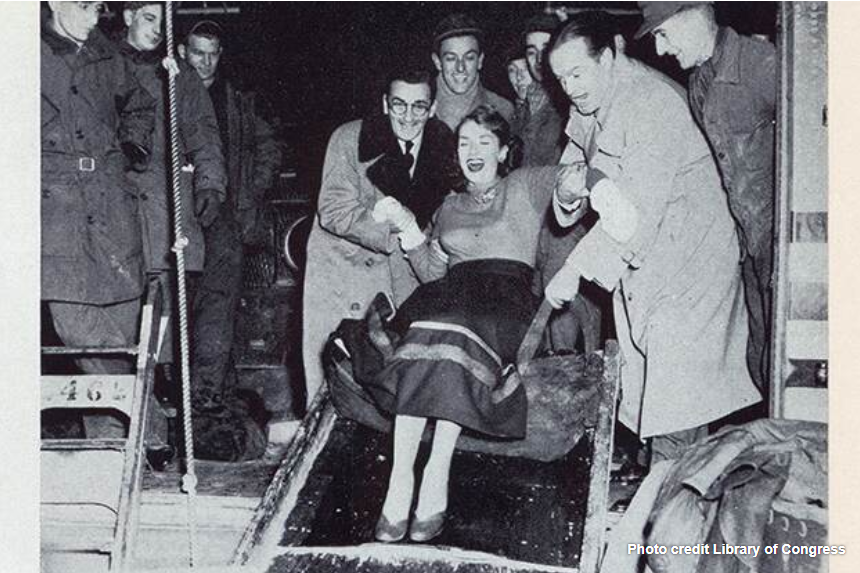
Irving Berlin, Jinx Falkenburg and Bob Hope
Conclusion
In reflecting on these stories, we are reminded that even during periods of hardship, acts of kindness and a focus on human connection can foster resilience and hope. The Berlin Airlift’s Christmas moments serve as lasting proof that compassion can be a powerful force for overcoming adversity.
NOTES
NOTES
1General Clay was the US Military Governor of Germany.
2From the Bill Downs website:
https://www.billdownscbs.com/2016/12/1948-berliners-celebrate-christmas-as.html
3United Service Organizations – A Non-profit offering support and recreation to US military personnel and families. The Bob Hope Tours were under its umbrella.